.png?width=2586&height=283&name=VL_LockupHorizontalReverse%20(1).png "Virtuosi League logo")

Virtual Event Recap
The most accomplished leaders often share a common blind spot: they assume the success patterns that worked in one organization will work in another.
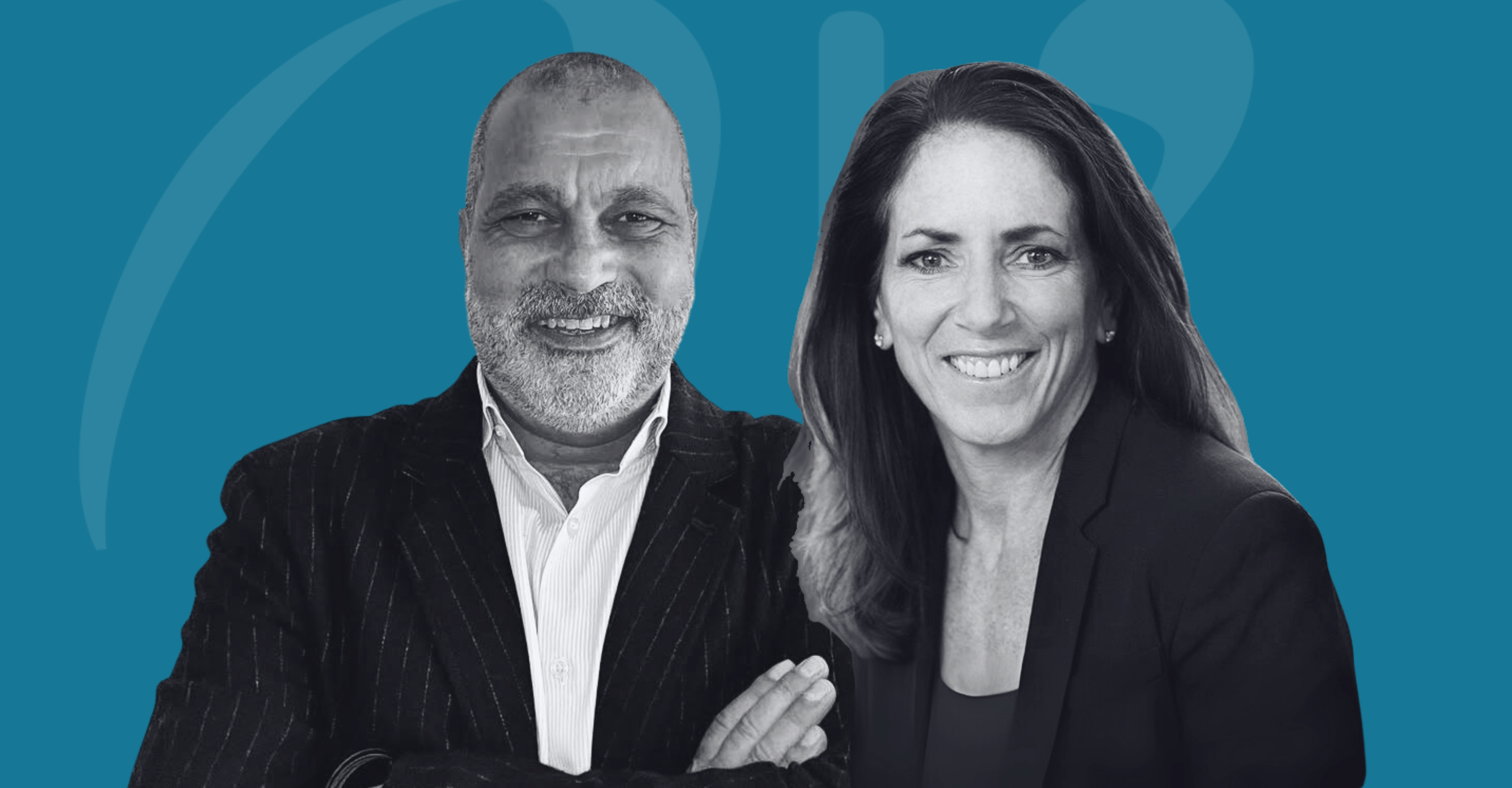
In our second LEAP Flagship session, Rebecca Messina (former Global CMO, Uber and Beam Suntory) and Clive Sirkin (former Chief Growth Officer, Kellogg Company) examined what it means to understand the landscape you're operating in—and what happens when you misread it entirely.
The central insight: relationships don't transfer. Neither does credibility. You have to earn it again every time.
When Success Patterns Become Blind Spots
Rebecca Messina spent over two decades building equity and credibility within one organization. When she made a senior-level move, she brought with her a deep fluency in what had worked—the stories, the frameworks, the reference points that had shaped her success.
Forty-five days into the new role, her boss delivered feedback that stopped her cold: the team felt unseen, overwhelmed by references to her previous organization, and disconnected from her leadership.
"I wanted to connect," she reflected. "I believed those stories would resonate. Sadly, they didn't. What they did was unify the team against me."
Her repair was public and direct. At the next company gathering, she opened with two words: "I'm sorry."
She avoided deflecting or rationalizing. She owned the miss entirely. "I'm sorry I didn't see you. I'm sorry I didn't bring more of me to this. I'm sorry I let the last 45 days go the way they did."
By exposing herself in an unguarded way, she created space for the team to do the same. The shift was immediate—even with no perfect answers, because she had finally read the room.
Her guidance for leaders entering new environments:
Learn before you teach. Spend your first weeks understanding their history, pride points, and pain. Your playbook can wait.
Name what you're still learning. Saying "I don't know this yet" signals respect for existing culture and lowers defensiveness.
Watch your language—literally and culturally. When Rebecca moved to France for a role without speaking French, her assistant refused to speak English to her for six weeks, even though she was fluent. The message: you're in my home, and you're not even trying. Later, at another org, Rebecca stopped using the word "brand"—which connoted a department and deepened division—and instead spoke about "bringing humanity into the company." Same concept with a totally different resonance.
The principle: context is code for connection. Miss it, and even your best intentions create distance.
Reframing Politics as Navigation
Clive Sirkin addressed the word most leaders avoid: politics.
"Politics is not a bad thing," he said plainly. "It's the way the world works."
His definition was clarifying. Politics is simply understanding where people are coming from, how they think, and positioning your work so they can engage with it. It's information and navigation rather than ideology and compromise.
Early in a transformation role, Clive was brought in to drive change. He moved fast, pushed hard, and believed his urgency would inspire the organization. Instead, a senior leader provided tough feedback on how the team was made to feel.
Clive had misread the landscape entirely and while his intent was transformation, his impact was alienation.
He made three deliberate corrections:
1) Manage fear, not just outcomes.
Change triggers fear—of failure, of job loss, of looking incompetent. Clive's role wasn't to dismiss that fear but to address it directly. As he put it: "Convince them they're standing in a puddle, not on a frozen lake. Worst case, they'll ruin a pair of shoes. You'll buy them new ones."
2) Give gifts before asking for effort.
Clive had spent months demanding change without first solving problems for the people he was asking to change. He shifted: "What is your number one pain point today? Let me help you solve that."
3) Have playdates.
Clive started scheduling time every week to meet with people across the organization—not to pitch, but to listen. "Spend genuine, quality time with people. Not just in your function. Across the organization."
The Inkblot Strategy
After that experience, Clive heard a story about counterinsurgency strategy that shifted his thinking. The military had learned that creating change and moving on didn't create lasting impact. What worked was staying, investing, and building trust over time—creating "inkblots" of stability that would eventually connect.
Clive applied the same logic. He stopped trying to change everything everywhere. He identified the teams, markets, and leaders who either needed help most or wanted it most—and doubled down. Progress became visible and results followed. The rest of the organization started asking for the same support.
"Create wonderful things," he said. "When you create wonderful things, the rest of the organization goes, 'I want some of that.'"
The Difference Between Fear and Respect
One final distinction emerged in Clive's reflection.
He said, "As you get into more senior roles, people are looking at the title and the office you represent, not just the human you are. You can, either innocently or without thinking, make people feel bad to the point that they go home super stressed."
A former chairman once told him: "I know there are two types of people in this company. Those who fear me and those who respect me. I try really hard to have more people respect me than fear me."
Clive took that to heart.
What This Means for Leaders
Understanding the landscape can’t be limited to reading reports or sitting through onboarding meetings. It's about diagnosing the forces that shape how decisions get made, how people relate to each other, and what the organization truly values.
Key principles:
→ Relationships don't transfer. Start every new environment with humility, curiosity, and willingness to learn before you lead.
→ Context is code for connection. If you miss the landscape, even your best ideas will land flat.
→ Politics is information. Reframe it as understanding how decisions get made, not as something to fear.
→ Fear is the default. Your job is to address it, not dismiss it.
→ Give before you ask. Solve problems for people before demanding they solve problems for you.
As Clive put it simply: "Understand fear. Give gifts. Have playdates."
The work of leadership isn't always visible. But it's the work that determines whether your ideas actually move forward.

Leadership in the Age of the Unthinkable, Still
Why the Future of Work Is Really About Leadership