.png?width=2586&height=283&name=VL_LockupHorizontalReverse%20(1).png "Virtuosi League logo")

Leadership begins within, but it doesn’t stay there.
Reinforce Your Foundation, the first of the LEAP Six Pillars of Leadership, asks leaders to understand who they are, what they value, and how those beliefs shape the way they show up. Understand the Landscape, the second pillar, builds directly on that foundation by turning leaders’ attention outward.
Understanding the Landscape is the practice of developing the situational and contextual awareness required to lead the organization: its people, culture, norms, relationships, priorities, incentives, decision-making dynamics, and unwritten rules. This pillar strengthens leaders’ situational awareness of organizational currencies like these to enhance their impact.
This can easily be mistaken for learning to play politics, but the executives guiding participants through our LEAP programs describe something much more nuanced. Politics are part of every organization because organizations are made of people. But landscape awareness goes further, requiring leaders to understand how people’s beliefs inform their actions, where influence actually lives, how an organization’s history shapes its present, when a culture is ready for change, and how your own leadership style may need to flex without compromising the values named and established in Pillar 1.
That work is difficult because senior leaders are often rewarded for arriving with answers. Experience gives us pattern recognition, confidence, and a repertoire of approaches that have worked before. Yet the very expertise that earns a leadership role can make it harder to remain a student of the new environments we enter.
Some of the most accomplished leaders in the Virtuosi League community have learned this lesson through transformations, cultural transitions, ambitious ideas, and moments when the right strategy simply was not enough. This assortment of experiences reveal the many ways this shows up from leader to leader and org to org.
Soyoung Kang: Read More Than the Room
-1.png?width=2304&height=1343&name=Soyoung%20Kang%20(2)-1.png)
Every leader has heard the advice to read the room. Soyoung Kang, President of eos Products, believes leaders need to go much further: “read the whole damn building.” Drawing on her early experience studying architecture, Soyoung leans on this metaphor to explain how a room never exists in isolation. It connects to other rooms, systems, structures, and flows, just as any team or function operates within a larger organizational ecosystem.
As leaders become more senior, functional expertise becomes only one source of effectiveness. Increasingly, they have to understand how the pieces around them interact. That means listening beyond the conversation immediately in front of them, learning how decisions travel across functions, and recognizing where trust and influence have already been built.
Soyoung’s perspective expands the definition of situational awareness. Understanding the landscape requires seeing an organization as a living system rather than a collection of isolated teams. The goal is to understand enough of that system to work within it, connect across it, and ultimately help it move.
Go beyond simply reading the room with tips from Soyoung Kang.
Rebecca Messina: Recalibrate Your Approach to Accelerating Progress
.png?width=2304&height=1343&name=Rebecca%20Messina%20(4).png)
Previous success creates its own kind of risk. Take it from Rebecca Messina.
After more than two decades at Coca-Cola, including leadership assignments across countries and cultures, Rebecca had accumulated a deep reservoir of experience. Yet when she moved into a new organization, she discovered that the stories and practices meant to demonstrate that experience could unintentionally signal that she had not yet taken the time to understand the people in front of her.
Her response became the basis for a powerful leadership lesson: “I can adapt to the situation, but I don’t have to adapt my values.”
That distinction is the primary bridge between Pillars 1 and 2.. A strong foundation does not mean showing up exactly the same way in every environment. Values can remain constant while leadership behavior changes. Language can change. Listening can deepen. The pace of action can shift. The way leaders build credibility or communicate an idea may need to reflect the people and culture around them.
Rebecca describes context as a form of connection. Leaders who understand the landscape learn the organization’s language, observe its pace and decision-making norms, and test their assumptions before applying an old playbook to today’s environment.
Read more from Rebecca Messina on recalibrating and adapting before accelerating change.
Andrea Perez: Listen Before You Lead
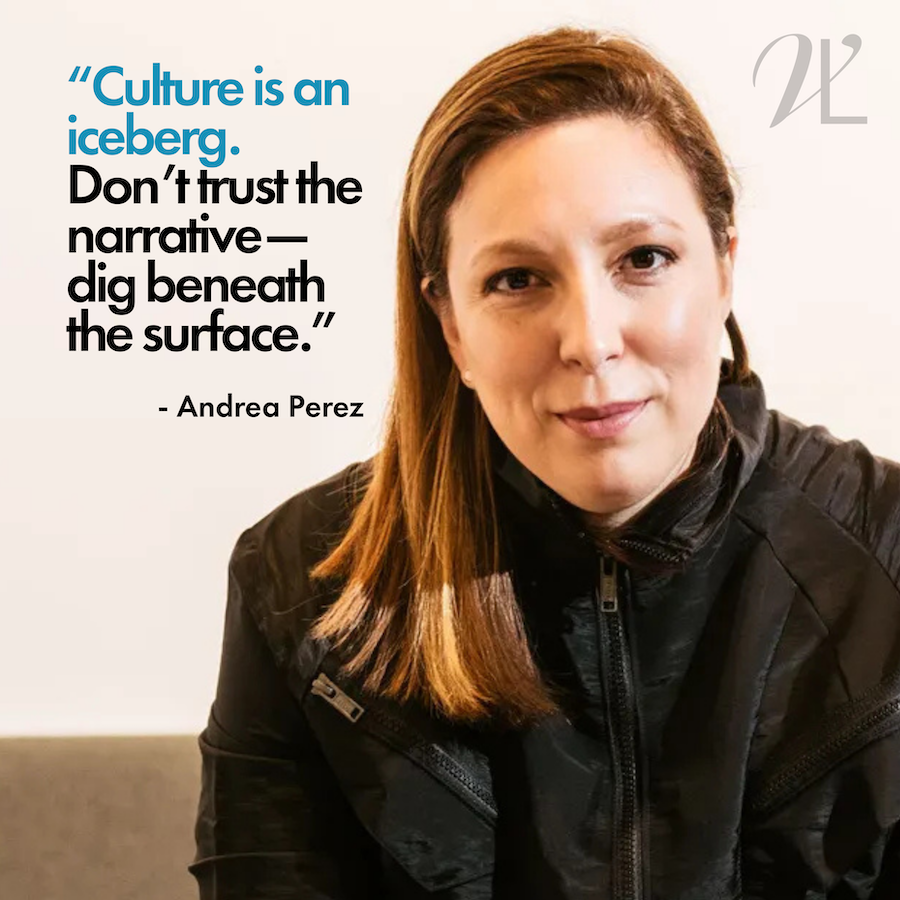
Andrea learned a related lesson after entering a new leadership role with a strong vision for change.
The ideas themselves were not the problem. She had moved before investing enough time in understanding the leaders, relationships, and history around her.
“You really have to know the leaders you are working for,” Andrea said.
That experience changed the sequence of how she leads. Listening comes first. Relationships create trust. Trust creates the conditions in which ambitious ideas have a chance to succeed.
For leaders accustomed to being hired for their ability to transform businesses, that sequencing can feel counterintuitive. The mandate may be urgent, but credibility rarely arrives with the title. It develops through curiosity, empathy, consistency, and evidence that a leader respects what existed before they arrived.
Understanding the landscape therefore becomes part of transformation itself. Leaders earn the ability to influence an organization by demonstrating that they have first taken the time to understand it.
Read more from Andrea Perez on active listening and building trust as a leader.
Andrea Perez & Michelle Hagen: Culture Is an Iceberg; Examine What’s Beneath the Surface
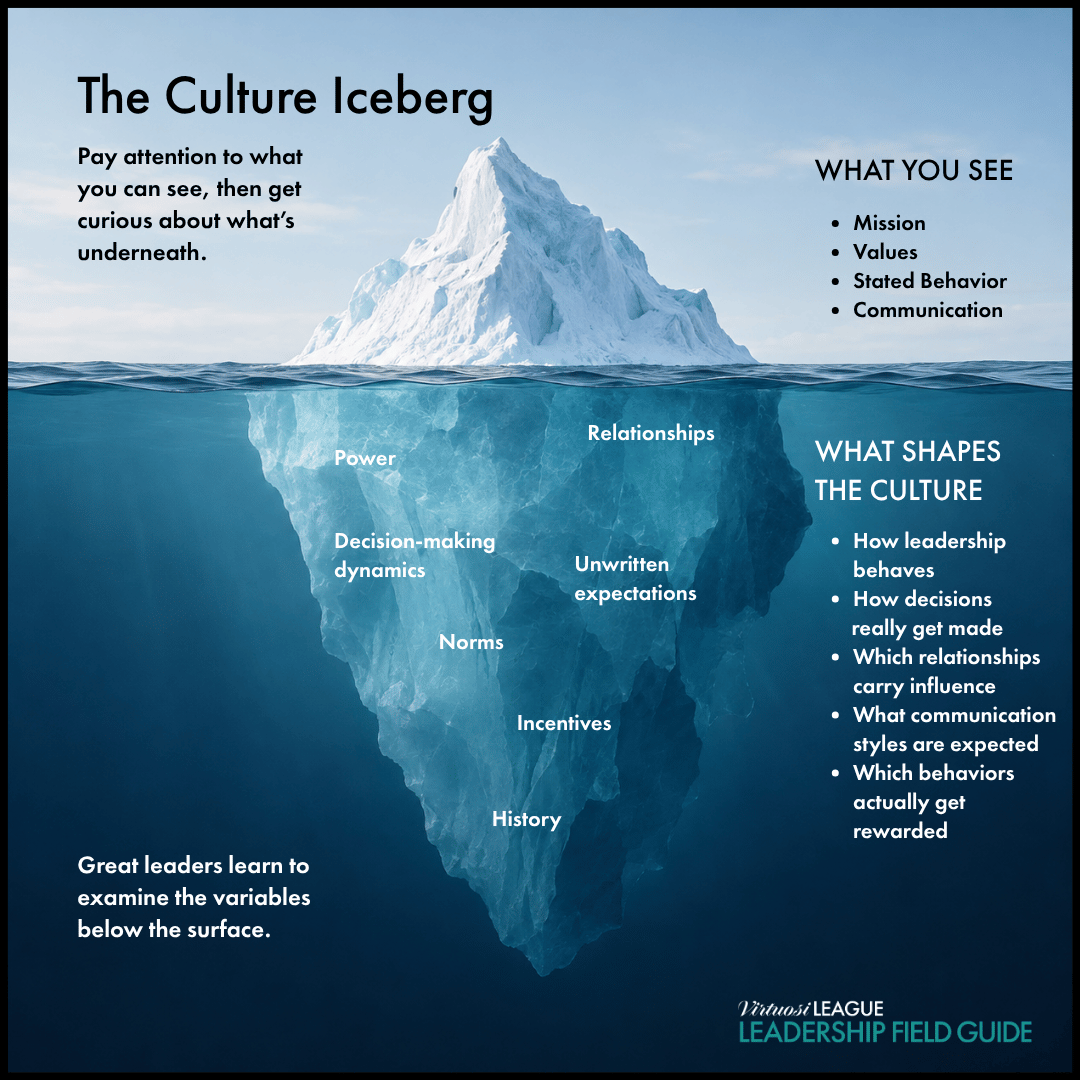
Andrea and Michelle Hagen, a Paramount Pictures executive, lean on the Culture Iceberg model to acquire this understanding. Stated beliefs, a mission statement, and “official” internal and external communications compose everything we see above the water line. Beneath the surface lies all the decision-making processes, spheres of influence and power, and organizational norms. Andrea, Michelle, and many others in the Virtuosi League community have emphasized how costly it can be to misread or ignore these submarine signals.
Read more from Andrea Perez and Michelle Hagen on navigating the Culture Iceberg.
Michelle Hagen: Politics Are People
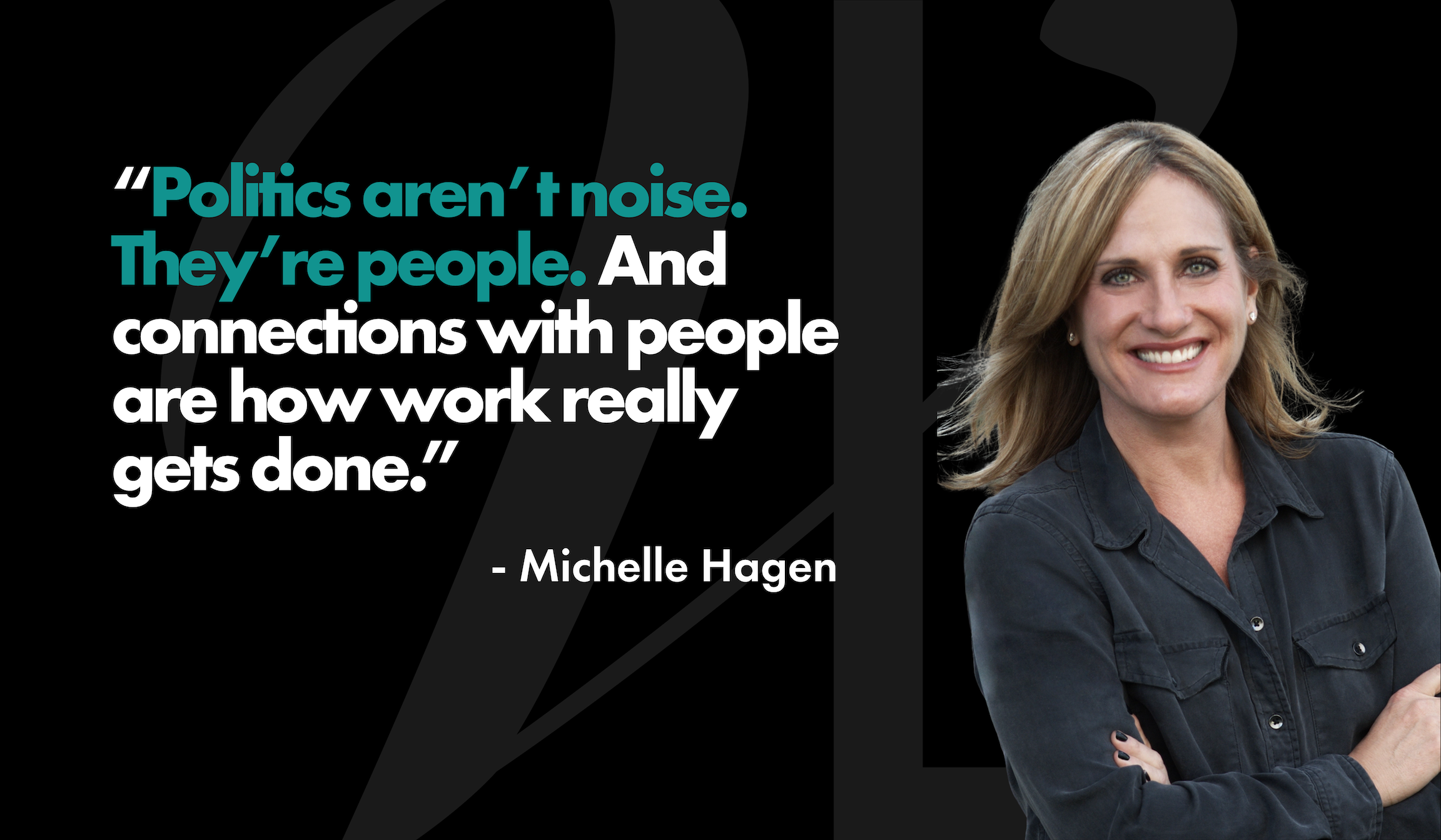
Michelle Hagen, EVP of Global Partnerships at Paramount Pictures, once saw office politics as something separate from the real work. Over time, she came to a different conclusion.
“Politics aren’t noise. They’re people. And connections with people are how work really gets done.”
That reframing removes some of the cynicism from the idea of organizational politics.
Understanding influence does not require manipulation. It requires curiosity about why people hold particular positions, what pressures they are carrying, where decisions actually happen, and how information moves through an organization.
Formal structures tell only part of the story. While an organizational chart can tell you who owns a function, it can’t usually tell you whose opinion a leader trusts, which relationships carry historical weight, or why resistance exists around a particular issue.
Michelle’s approach asks leaders to replace judgment with investigation. What looks like obstruction may reflect an incentive, concern, experience, or pressure that has not yet been understood. By treating organizational dynamics as human dynamics, leaders become better equipped to navigate them without losing transparency or authenticity.
Learn how Michelle Hagen recasts the cynicism around organizational politics.
Eric Schwartz: Learn the Unwritten Rules
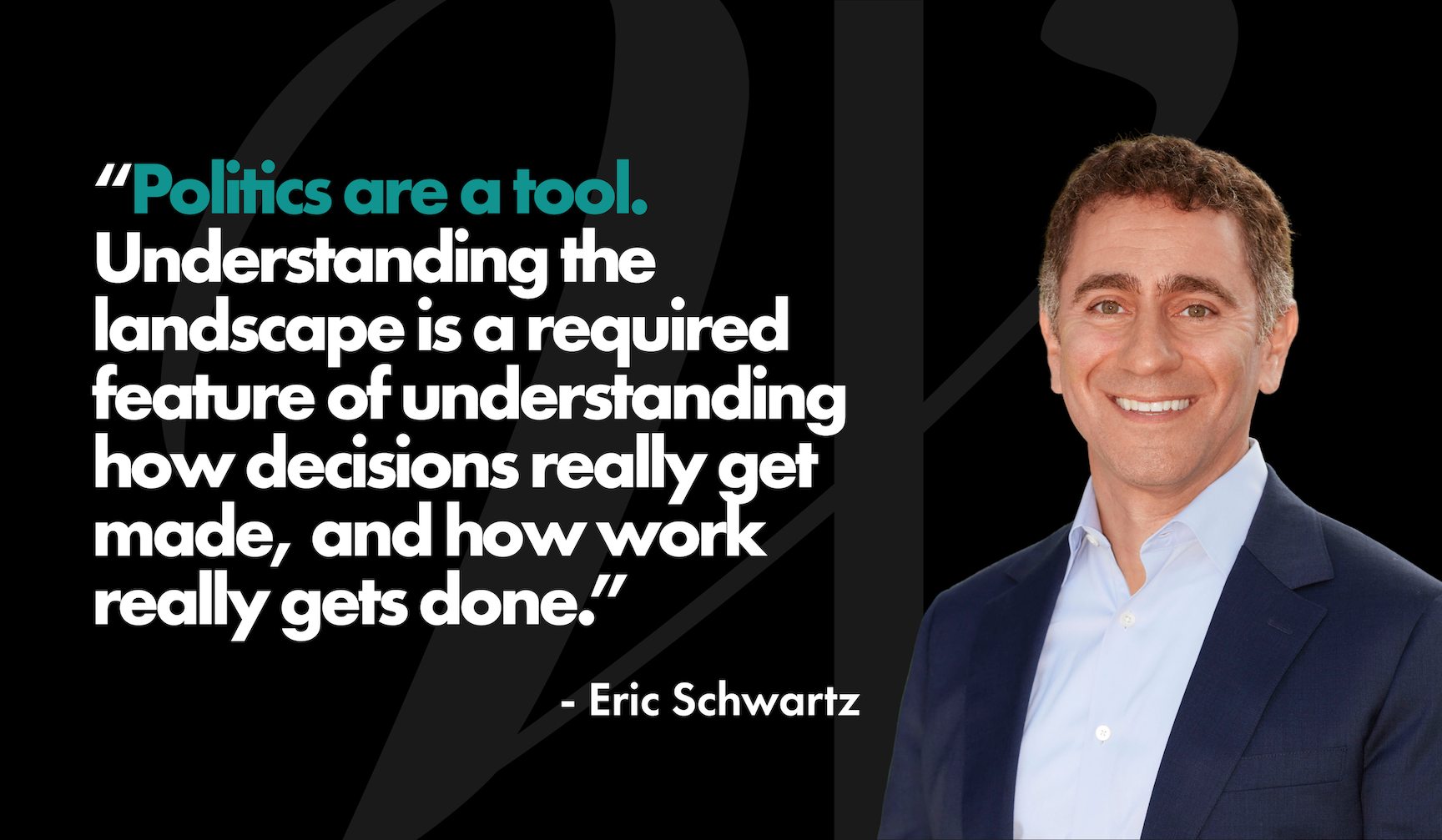
For Eric Schwartz, Chief Marketing Officer at Clorox, understanding the landscape means paying close attention to the operating system beneath the organization.
“Politics are a tool. Understanding the landscape is a required feature of understanding how decisions really get made, and how work really gets done.”
Across transformations, acquisitions, and cultural transitions, Eric has seen how quickly a leadership behavior that succeeds in one environment can fail in another. At Hillshire Brands, for example, the acquisition by Tyson Foods brought him into a different culture with different signals about how leaders earned credibility and influence.
The lesson is larger than knowing who has power. Every organization develops unwritten norms around disagreement, decision-making, collaboration, speed, expertise, and trust. Leaders who ignore those norms can expend enormous energy pushing against invisible resistance.
Understanding them does not require accepting all of them. It gives leaders the information necessary to decide where to adapt, where to challenge, and where change will require more groundwork.
Read these tips from Eric Schwartz on learning the unwritten rules of an organization and using them as tools to accelerate change.
Karin Timpone: Know When to Toggle

Karin Timpone adds another layer to landscape awareness: the leader must change modes as the environment changes.
She describes leadership as a continual “toggle” between qualities that can appear contradictory: curiosity and conviction, patience and tenacity, creativity and evidence, listening and action. Her experiences leading innovation at Disney/ABC and transformation at Marriott illustrate why the same leadership approach cannot simply be applied everywhere.
In one environment, transformation required years of building belief and addressing stakeholder concerns. In another, the ambition already existed and the missing ingredient was organizational scaffolding across functions including technology, operations, and finance.
Understanding the landscape allowed Karin to diagnose which leadership mode the moment required.
That may be one of the most important capabilities in this pillar. Strong leaders develop a point of view, but they also maintain enough curiosity to recognize when the situation demands something different from them. Adaptability becomes less about changing who they are and more about changing how they engage.
Dive into the leadership toggle with Karin Timpone.
Understanding Comes Before Influence
Across these leaders’ experiences, a common pattern emerges: Understanding the landscape begins with curiosity.
This practice requires leaders to see beyond formal structures, listen before acting, recognize where influence and trust already exist, understand what history has shaped the present, and adapt their approach to the environment in front of them.
That work also creates an important guardrail.
Pillar 1, Reinforce Your Foundation, asks leaders to establish the foundation they will lead from. Pillar 2, Understand the Landscape, asks them to encounter the world as it actually is. Together, the two help leaders distinguish between adapting how they lead and compromising what they stand for.
The strongest leaders can do both. They remain grounded enough to know themselves while curious enough to understand the systems around them.
That is what gives them the context to decide what comes next.
Understanding the Landscape Is the Next Step
The LEAP Six Pillars of Leadership are deliberately sequential. Reinforcing your foundation gives you clarity about the leader you want to be. Understanding the landscape gives you the context required to lead effectively beyond yourself.
From there, leadership becomes increasingly relational. The next pillar, Strengthen Your Teams, asks leaders to turn that awareness toward the people they lead and create the conditions for those teams to perform at their best.
In Case You Missed it:
- Pillar 1: Reinforce Your Foundation, the leadership work that starts within